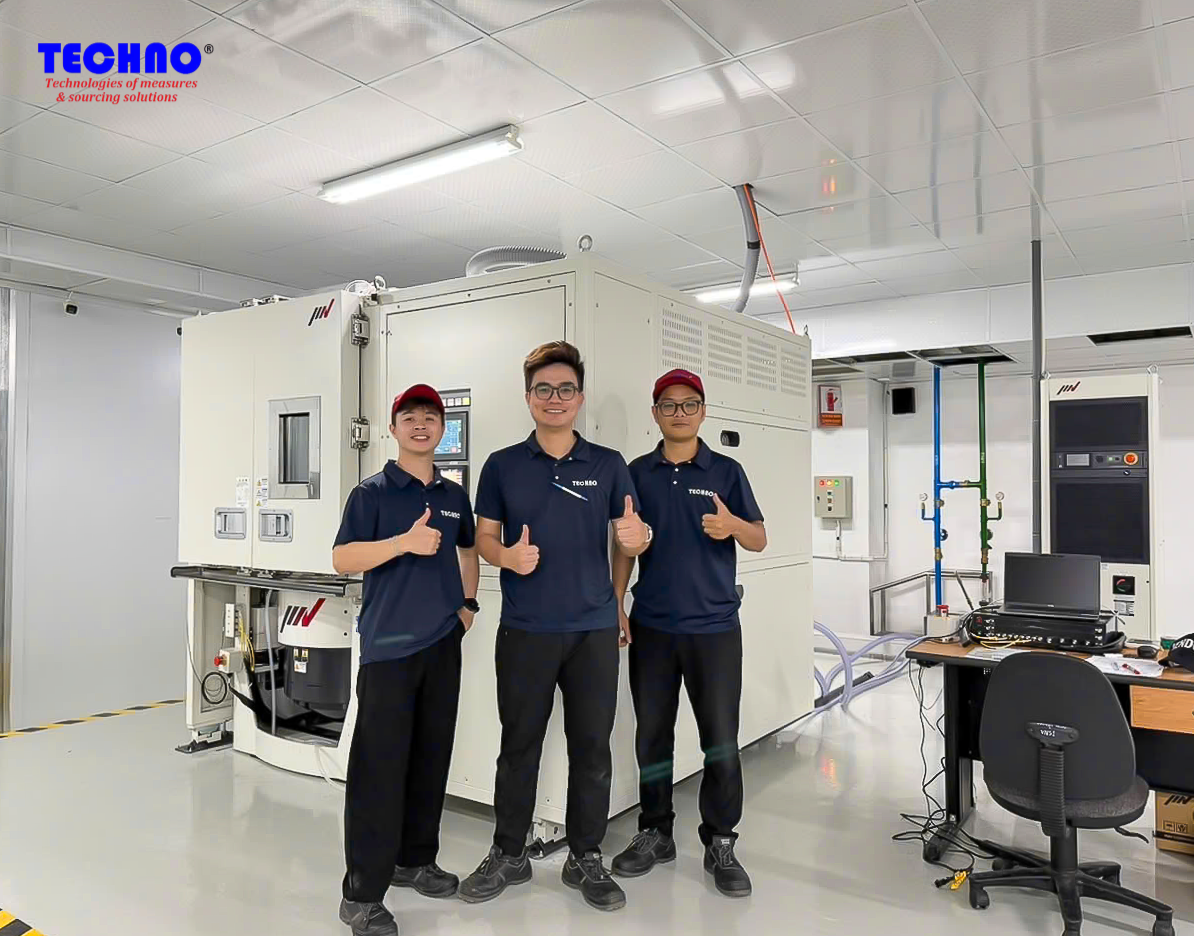

Completed the installation and handover of the Cosmopia Thermal Shock Test Chamber Model ES-2906L
Recently, Techno successfully completed the installation and handover of the Cosmopia Thermal Shock Chamber system Model ES-2906L to a customer, further reinforcing its capability in deploying industrial durability and reliability testing solutions.
Thermal shock chambers are specialized systems designed to simulate rapid temperature changes within a short period of time, enabling manufacturers to evaluate the thermal resistance, stability, and reliability of components and materials under harsh environmental conditions. These systems are widely applied across the electronics, semiconductor, automotive, materials, and industrial manufacturing industries.
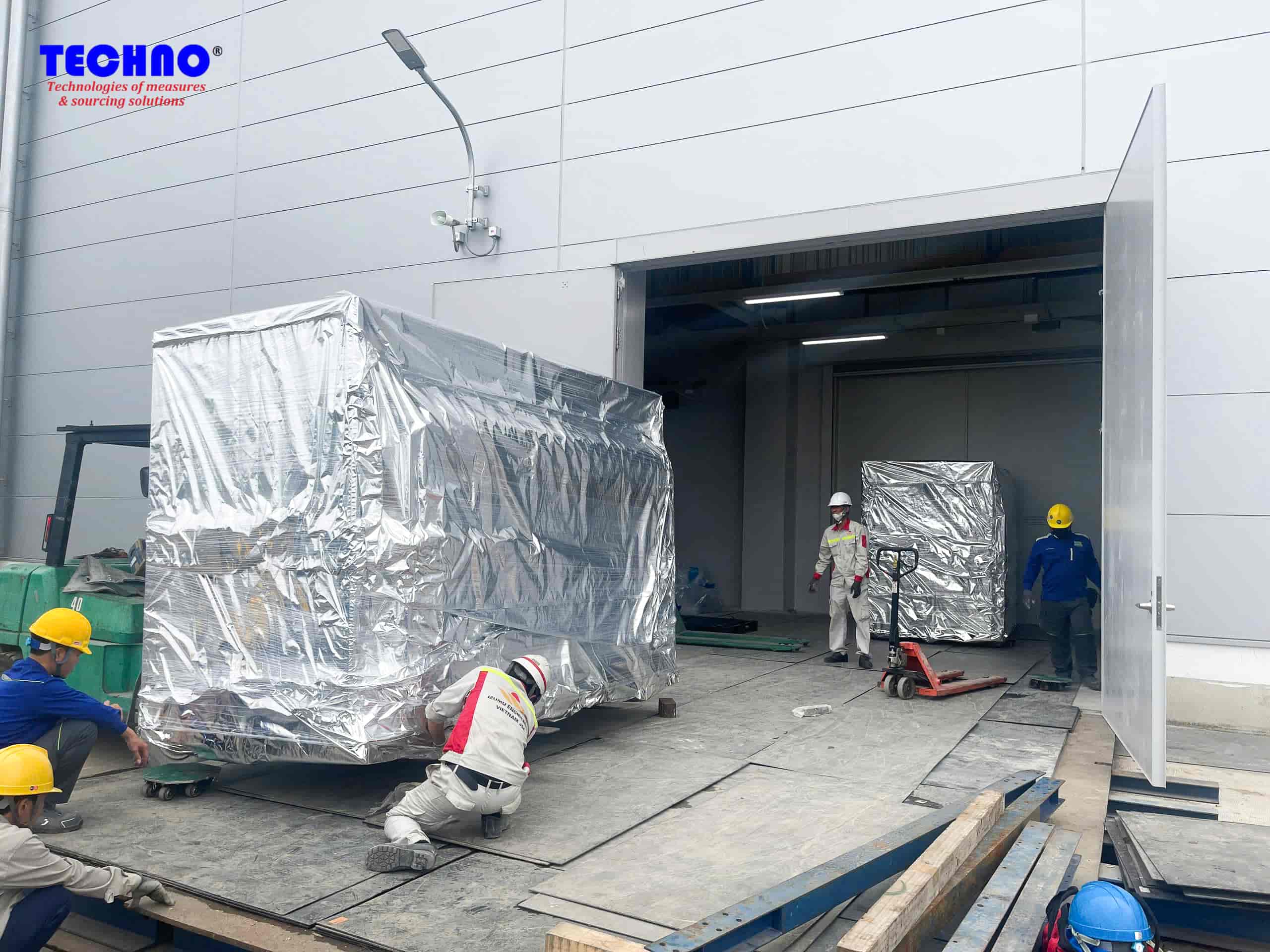 Throughout the project, the equipment was carefully transported and handled to ensure safety and maintain system integrity before installation.
👉 If your business is looking for measurement equipment solutions, please contact TECHNO at 0911.559.559 for detailed advice from our team of engineers.
1. Cosmopia – Environmental Testing Solutions from Japan
1.1. Company Background
Cosmopia Hightech is a Japanese environmental testing equipment manufacturer headquartered in Shizuoka, Japan, and is recognized as the successor to Hitachi’s environmental testing equipment division.
Since 1970, Hitachi has developed environmental test chambers for a wide range of high-tech industries. In October 2023, Cosmopia Hightech officially acquired this business segment from the Hitachi–Johnson Controls Air Conditioning joint venture, including core technologies and patents related to industrial refrigeration systems.
1.2. Technological Strengths
- Advanced Scroll compressor technology inherited from Hitachi ensures stable operation, high durability, and ultra-low temperature performance.
- High-speed temperature transition capability supports stringent testing requirements in accordance with standards such as JEDEC and IEC for the semiconductor and electronics industries.
- Environmentally conscious design utilizing low-GWP refrigerants contributes to sustainable manufacturing and reduced environmental impact.
2. Key Features of the Thermal Shock Chamber
The Cosmopia ES-2906L Thermal Shock Test Chamber is equipped with a variety of outstanding features that support product testing and inspection processes, including:
- Wide temperature range suitable for harsh thermal shock testing applications
- Rapid switching between high and low temperatures to simulate real operating conditions
- High temperature stability for accurate and repeatable test results
- Powerful heating and cooling performance for efficient testing cycles
- Large chamber capacity suitable for large components and heavy sample loads
- Stable cyclic testing performance across multiple temperature cycles
- Fast temperature recovery capability to improve testing efficiency
- Water-cooled refrigeration system ensuring stable and continuous operation
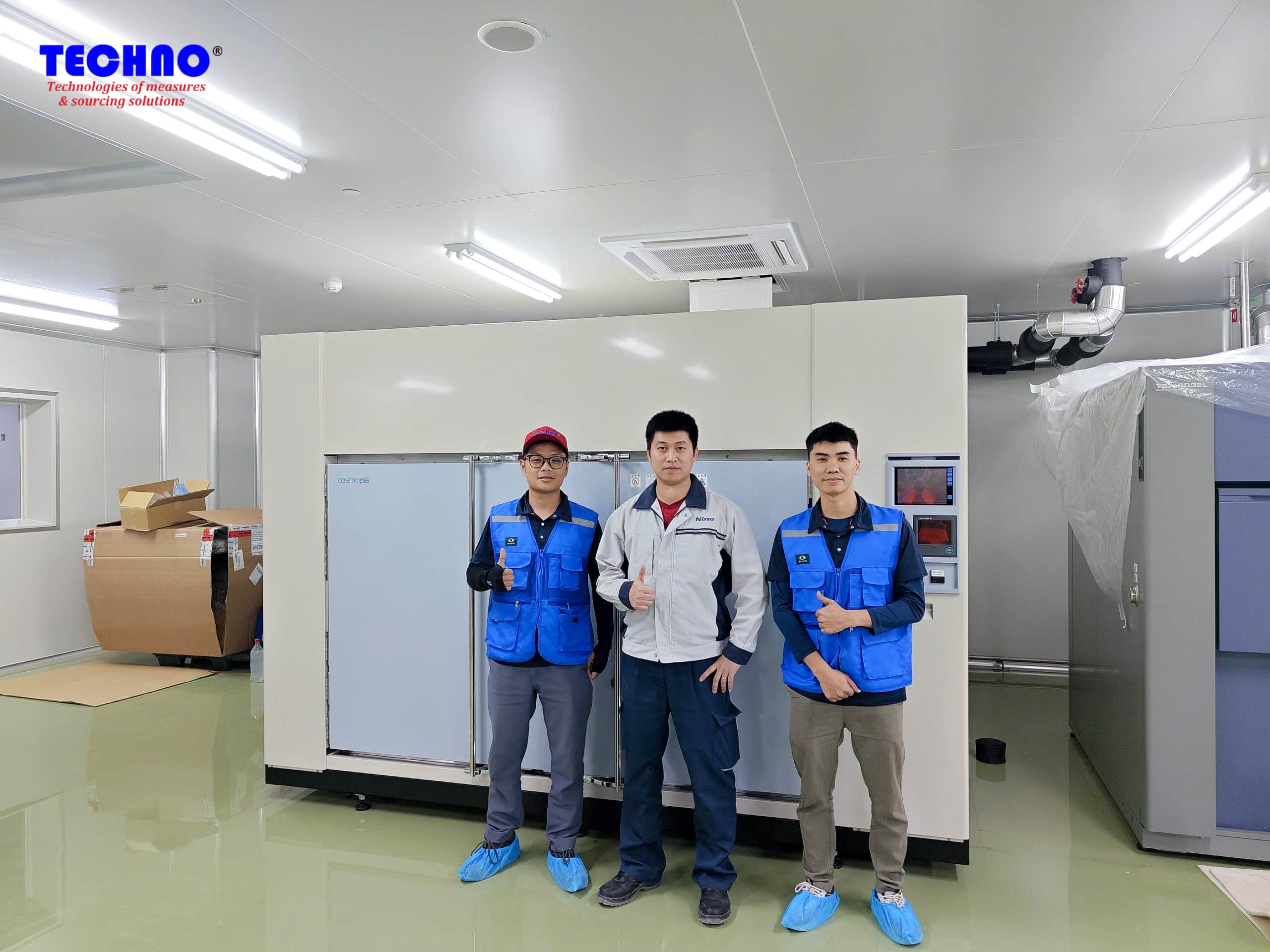
Techno has completed the installation, commissioning, and handover of the equipment system at the customer’s factory.
3. Applications of Thermal Shock Testing in Industry
Thermal shock testing plays a critical role in product research, development, and quality assurance by simulating rapid temperature fluctuations that products may encounter during real-world operation.
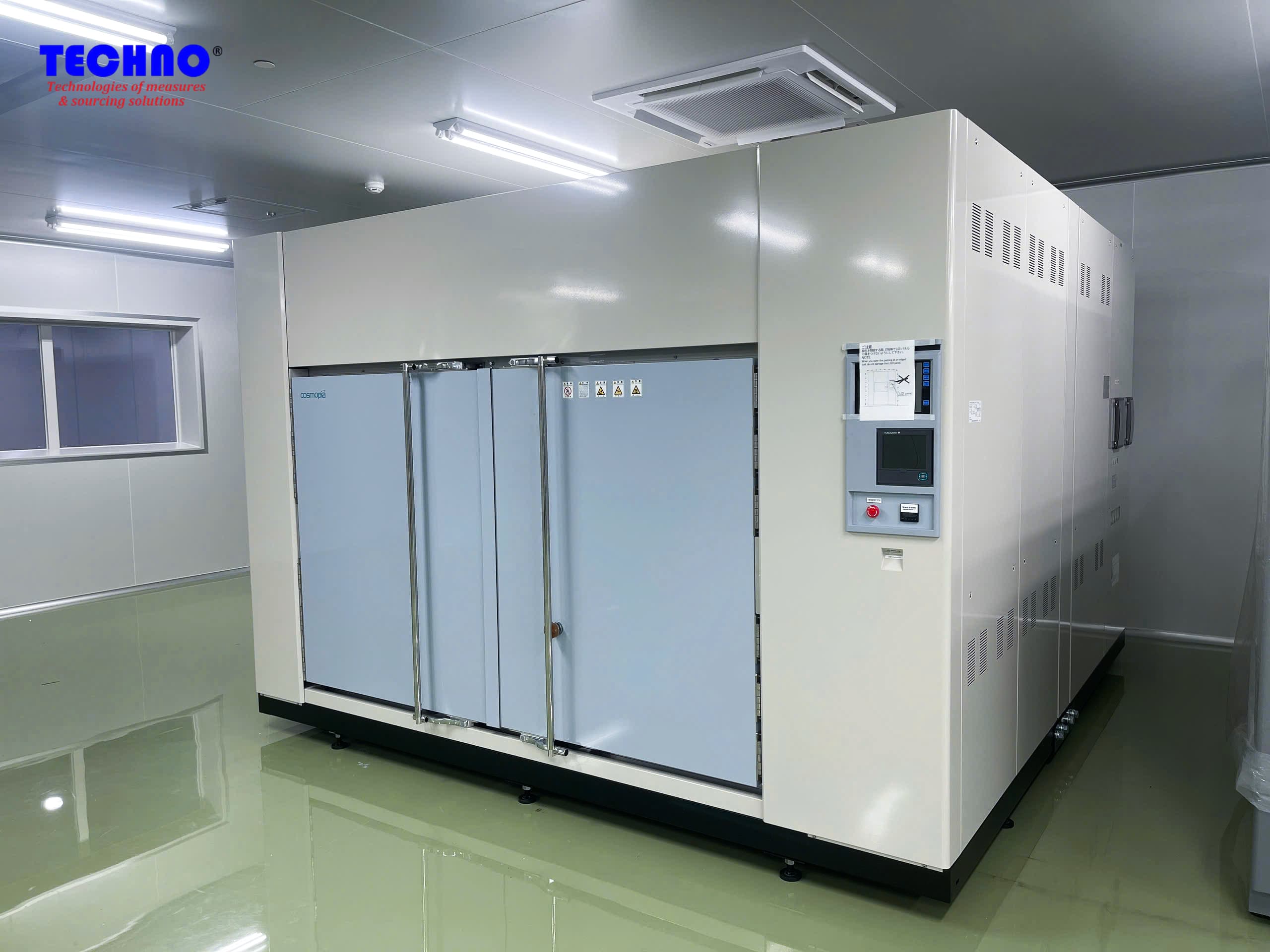 The completed equipment is ready for delivery to the customer.
| Application | Description |
| Research & Development (R&D) |
|
| Prototype Testing & Pre-Mass Production |
|
| Electronics & Semiconductor Industry |
|
| Automotive & Manufacturing Industry |
|
For this project, Techno fully implemented the installation, commissioning, calibration, operational verification, and user training processes in accordance with technical standards.
As the official representative of Cosmopia Hightech in Vietnam, Techno remains committed to providing professional consulting, implementation, and technical support services to customers across various industries.
📩 Contact Techno for consultation on environmental testing solutions tailored to your production and quality control requirements.